













Why Your Just Listed Posts Are Sabotaging Your Brand
The Meme-Worthy Truth About Why Personal Content Beats Perfect Content You spent 45 minutes designing the perfect “Just Listed” graphic in Canva. Bold fonts. Professional






If you ask what the current mortgage rate is, the number you hear will almost always be the going rate for a 30-year fixed-rate mortgage.
It’s generally considered the gold standard of home loans. The rate never changes, the principal and interest portion of the payment is predictable, and there’s no risk of an unpleasant adjustment lurking somewhere down the road.
Adjustable-rate mortgages, commonly called ARMs, don’t inspire the same warm and fuzzy feelings, and many buyers dismiss them entirely.
But even buyers who are open to considering one often ask their real estate agent whether it’s a smart move, or if they’re taking too much of a risk.
When they do, there’s a good chance the agent’s answer will sound something like: “It depends.”
First of all, agents have to be careful about giving definitive financial advice. Beyond that, there simply isn’t a clear-cut answer.
It depends on the buyer. It depends on how long they expect to own the home. It depends on their comfort with risk. An ARM can be a good option for some buyers, but not for everyone.
None of that is wrong, but it may not feel particularly helpful when you’re trying to make a decision. Fortunately, some recent research offers a little more substance than “it depends.”
An adjustable-rate mortgage typically offers a lower introductory interest rate than a 30-year fixed mortgage. That rate remains fixed for a certain number of years, often five, seven, or ten. After that initial period, it can adjust periodically based on current market conditions.
The obvious appeal is that the borrower starts with a lower rate and monthly payment. The obvious risk is that both could eventually rise.
But an analysis of Freddie Mac mortgage-rate data going back to 1970 found that about 71.6% of buyers who chose an ARM would have had an opportunity to refinance into a 30-year fixed mortgage with a rate at least half a percentage point lower than their original rate within five years.
In plain English, roughly seven out of ten would have had a chance to lock in an even lower fixed rate before their ARM ever reached its first adjustment.
More than half, 52.8%, would have had the opportunity to refinance at a rate at least one full percentage point below the rate they originally received.
That doesn’t mean every one of those borrowers actually refinanced, or that doing so would have always produced net savings after refinancing costs. Nor does it guarantee that history will repeat itself. But it’s something concrete to factor into the decision when weighing the potential risk against the reward.
Historically, the odds of getting a lower initial payment and having an opportunity to refinance before the rate adjusted were more favorable than many buyers might assume.
Saving money is only one part of the decision. For many buyers, the scarier question is what happens if things don’t go according to plan.
What if rates don’t fall? What if refinancing isn’t possible? What if the ARM adjusts upward and the new payment is no longer affordable?
Those are legitimate concerns. Any buyer considering an ARM should understand how often the rate can adjust, how much it can increase at one time, and the maximum rate permitted over the life of the loan.
However, today’s ARMs aren’t quite the financial Wild West some buyers may remember from the housing crisis.
According to a recent analysis from TD Economics, modern ARMs generally have longer initial fixed-rate periods, explicit limits on how much rates can increase, and stricter underwriting requirements than many of their pre-2008 predecessors.
In fact, an ARM may be slightly more difficult to qualify for than a traditional fixed-rate mortgage. Lenders are required to consider whether a borrower could afford higher payments at potential future adjustment rates, not simply whether they can handle the attractive introductory payment.
That doesn’t eliminate all risk. A payment that’s technically affordable on paper may still feel uncomfortable within someone’s actual budget. You still have to take your own comfort level into consideration. If a potentially higher future mortgage payment is going to keep you up at night, it’s probably not the right fit for you.
But if your biggest fear is being approved based on the lower introductory payment, only to be blindsided by a payment you could never afford, know that today’s underwriting requirements are designed to account for that possibility. In a sense, the lender is already stress-testing that scenario before approving you for an adjustable-rate mortgage.
An adjustable-rate mortgage isn’t automatically better than a fixed-rate mortgage. But it isn’t automatically a risky or inferior choice either.
For someone who expects to sell within several years, anticipates refinancing, or simply wants to take advantage of a lower initial rate, an ARM may be worth serious consideration. History suggests the odds have often worked in the borrower’s favor, and today’s qualification standards and rate caps provide protections that didn’t always exist in the past.
The decision should still be made with a clear understanding of the worst-case payment, not just the appealing introductory one. A knowledgeable mortgage professional can explain the specific terms and run both scenarios. Depending on your broader financial situation, an accountant or financial advisor may also be worth consulting.
There’s no absolute answer to whether an ARM is “worth the risk.” But knowing that roughly seven out of ten borrowers historically had an opportunity to refinance into a lower fixed rate is useful information to consider before writing one off entirely.



The Meme-Worthy Truth About Why Personal Content Beats Perfect Content You spent 45 minutes designing the perfect “Just Listed” graphic in Canva. Bold fonts. Professional

There are some things that you don’t want to learn by mistake. Not that I haven’t made some of these mistakes myself. But if I

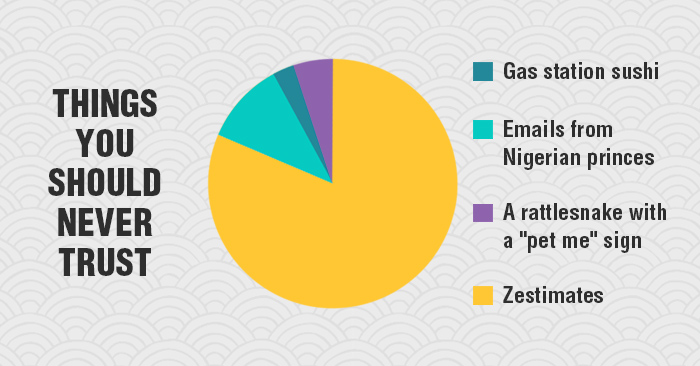
At this point everyone knows not to fall for the email from a Nigerian prince promising to share his fortune with you if you just

This article was published on April 5, 2013 by Amy Curtis and is being republished with her permission. With the spring market underway, my days

If you’ve been wondering if you can start out as a real estate agent part-time until you can get enough business to go full time,
Depending on your situation, it may not take the full 30 minutes.

This reset password link has expired. Check the latest email sent to you.