









The 2 Ingredients of a Viral Post
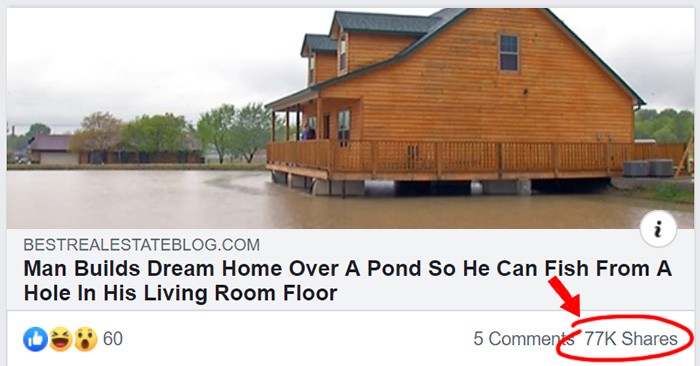
“Going viral” is such a subjective term, isn’t it? Ask ten people to name the point when something is officially “viral” and you’ll get ten





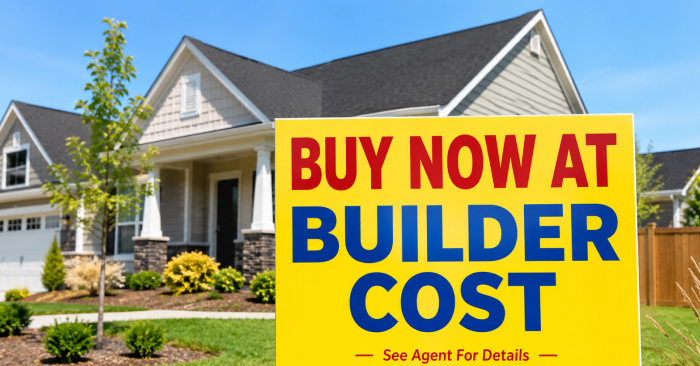
Most things cost more when they’re brand new.
A new car typically costs more than a used one. New furniture costs more than something somebody is selling on Facebook Marketplace. And nobody expects to pay less for the latest phone than they would for last year’s model.
So it would be perfectly reasonable to assume a newly built home would cost more than one somebody has already lived in.
But that isn’t always the case right now.
According to a recent National Association of REALTORS® article, the median price of a newly built single-family home was actually slightly lower than the median price of an existing home during the first quarter of 2026.
The difference was only $1,400 nationally, so that certainly doesn’t mean new homes are cheaper everywhere. Real estate prices vary tremendously from one area to another.
But it does raise an interesting question…
How can builders possibly sell brand-new homes for less when building them has become so expensive?
When you look at a newly built home, it’s easy to focus on the materials and finishes you can see.
But builders start spending money long before there’s even a shovel in the ground.
They have to purchase and prepare the land, obtain approvals and permits, complete engineering and environmental reviews, meet building codes, and carry financing costs throughout the process.
According to a National Association of Home Builders study cited in the NAR article, government regulations at the federal, state, and local levels add an average of $131,734 to the price of a new single-family home. That equals roughly 26% of the average new-home sales price.
And that’s before accounting for the labor and materials needed to actually build the house.
Builders are absorbing substantial costs before they ever have a home to sell. And while buyers need more affordable options, builders still need to make enough money to continue building the homes needed to help ease the housing shortage.
Builders can’t control every cost, but they can control what they build.
To appeal to affordability-minded buyers, many have begun building smaller homes on smaller lots, simplifying floor plans, and limiting the number of available choices. They may also use more economical fixtures and finishes instead of including higher-end features as standard.
That doesn’t mean the homes are poorly built. In many cases, they may meet newer standards for energy efficiency, technology, safety, and weather resistance that older homes do not.
But it could mean buyers are getting more of a blank slate.
A similarly priced resale home may already have mature landscaping, custom window treatments, upgraded flooring, built-ins, or a finished basement. A newly built home may come with fewer of those features because the builder is trying to keep the base price within reach.
Builders can also offer incentives individual homeowners usually can’t, such as mortgage-rate buydowns and closing-cost assistance. According to the NAR article, 62% of builders were using sales incentives in June, while more than one-third had reduced prices.
Those incentives can make a new home especially appealing to buyers who are more concerned about their monthly payment or cash needed at closing than upgraded countertops.
The advertised price of a newly built home may look surprisingly affordable, but it doesn’t necessarily include everything buyers see in the model home.
Upgraded cabinets, flooring, appliances, structural options, and premium lots can quickly push the final price well beyond the advertised base price. Buyers may also need to budget for things an existing home already has, such as blinds, fencing, landscaping, or a patio.
On the other hand, an older home may eventually need a new roof, HVAC system, windows, or appliances. A newly built home may offer lower utility bills and fewer major repairs during the first several years of ownership.
Determining which one offers the better value requires more than comparing two listing prices.
Builders play an essential role in solving the housing shortage, and many are finding creative ways to provide homes at prices buyers can afford.
But they’re also running businesses. Their sales representatives, preferred lenders, and design-center employees are naturally focused on helping the builder sell homes and remain profitable. There’s nothing wrong with that, but buyers should have someone equally focused on their interests.
So make sure to hire your own buyer’s agent to help you compare new construction with existing homes, evaluate incentives, identify costs that aren’t included in the base price, and determine which option offers the best overall value for your budget and priorities.
A brand-new home may actually cost less than an existing one in your area. Just make sure you compare everything that comes with each home—and everything that doesn’t—before deciding which one is truly the better deal.



“Going viral” is such a subjective term, isn’t it? Ask ten people to name the point when something is officially “viral” and you’ll get ten
Real estate agents come in all shapes, sizes and personality types, and not all of them fashion themselves as true salespeople. “I’m a consultant,” they

It’s almost impossible to avoid being exposed to news nowadays. Besides being on TV and radio 24/7, people get notifications on their cell phones, in

Being a team leader can be like being a bird bringing back food to feed a nest full of hungry babies. Without you feeding leads

Hey there, Real Estate friend – I know Facebook can really burn your biscuits, but… Don’t throw in the towel just yet. Your business page
Depending on your situation, it may not take the full 30 minutes.

This reset password link has expired. Check the latest email sent to you.