














Agents: Stop Sending Boring Postcards… Send Ones Like THESE! (18 examples)
Question: Have you seen the postcards most agents send out? BOOOR-ING! I’m pretty sure they make the prospects sleep-walk on their way back inside the





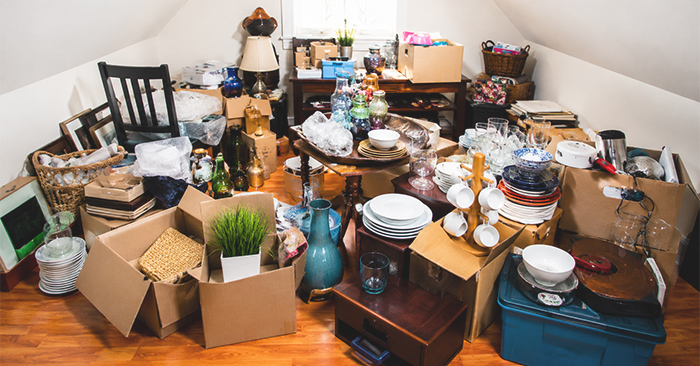
It’s easy (maybe even necessary) to joke about how much stuff our parents accumulate over the years.
For instance, there’s an entire “Millennial Inheritance Community” on Instagram devoted to humorously showcasing the unusual, overwhelming, and sometimes enormous collections people have inherited, or expect to someday.
Depending on your family dynamics, you may even tease your own parents about how you’ll need several dumpsters just to clear out their basement, attic, or garage.
But beneath the jokes, many adult children have a legitimate concern about eventually having to deal with a lifetime’s worth of belongings.
Whether it’s because their parents decide to downsize, move into assisted living, or pass away, few people look forward to sorting through decades of possessions and deciding what should be kept, sold, donated, or thrown away.
Unfortunately, it’s not something many families openly discuss or plan for.
And clearing out a parent’s home can be far more complicated and costly than most people anticipate.
According to a recent Realtor.com article, 84% of people who recently inherited a home said it needed to be cleaned out before it could be listed for sale. More than one-third said the cleanout was one of the hardest parts of the process.
That’s understandable when you consider how much stuff a typical home contains. Researchers studying middle-class American households once counted 2,260 visible possessions in just three rooms of one home.
And every one of those belongings may eventually require a decision. Someone has to determine what family members want to keep, what might be worth selling, what can be donated, and what needs to be thrown away.
So it’s hardly surprising that nearly two-thirds of the people surveyed said they were either unprepared to handle the process or didn’t know where to begin.
An estate cleanout costs an average of $1,250, according to estimates cited in the article, with especially large or difficult jobs costing $4,000 or more.
But the financial cost may be the easiest part to calculate.
Sorting through an entire home can take an enormous amount of time and energy. It’s not easy to set everything aside for days or weeks to go through every closet, box, and drawer when you have a job, family, home, and responsibilities of your own.
And if you live hours away or in another state, finding enough time to give the process your full attention can be difficult, if not impossible.
As a result, the process can linger for months, especially when emotions make it difficult to decide what should be kept or discarded.
Having siblings or other relatives who can help may lighten the workload, but it can also make matters more complicated. Disagreements may arise over who gets certain belongings, who is responsible for doing the work, or whether one person is doing more than everyone else.
Talking to your parents about what should eventually happen to their belongings can feel awkward, uncomfortable, or even a little morbid. But avoiding the subject won’t make the eventual task go away.
Your parents may not be eager to discuss any of this. Then again, maybe they’ve been wondering how to bring it up with you as well.
Simply starting the conversation can make an enormous difference. It may lead to small but worthwhile progress over time, rather than leaving the family with one enormous task that suddenly needs to be handled.
Depending on your relationship and family dynamics, here are a few ways to begin:
These conversations aren’t always easy to bring up. But approaching the subject while there’s no immediate crisis gives everyone more time, control, and opportunity to make thoughtful decisions.
You may still need a dumpster someday. With a little planning, though, you might need fewer of them and have a much better idea of what shouldn’t go inside.



Question: Have you seen the postcards most agents send out? BOOOR-ING! I’m pretty sure they make the prospects sleep-walk on their way back inside the

Via Big Stock Photo “Home is a shelter from storms—all sorts of storms.” — Political pundit William J. Bennett As I stand at what is probably

Landing yourself a listing appointment is hard enough, but then you still have to nail your presentation in order to walk out of it with

There’s no way around it… Now, more than ever, you’ve GOT to stand out as a real estate agent. To say our industry is over-saturated

As a real estate professional, you’ve got to be like Mary Poppins — prepared for anything and everything. Of course you need pens and your
Depending on your situation, it may not take the full 30 minutes.

This reset password link has expired. Check the latest email sent to you.